BMI and body fat percentage are two commonly used ways to look at body size and composition. They may seem similar at first, but they measure different things.
BMI, or Body Mass Index, compares your weight with your height. Body fat percentage estimates how much of your total body weight is made up of fat.
For example, two people can have the same height and weight and therefore have the same BMI, but their body fat percentages may be different because they have different amounts of muscle, fat, and other body tissues.
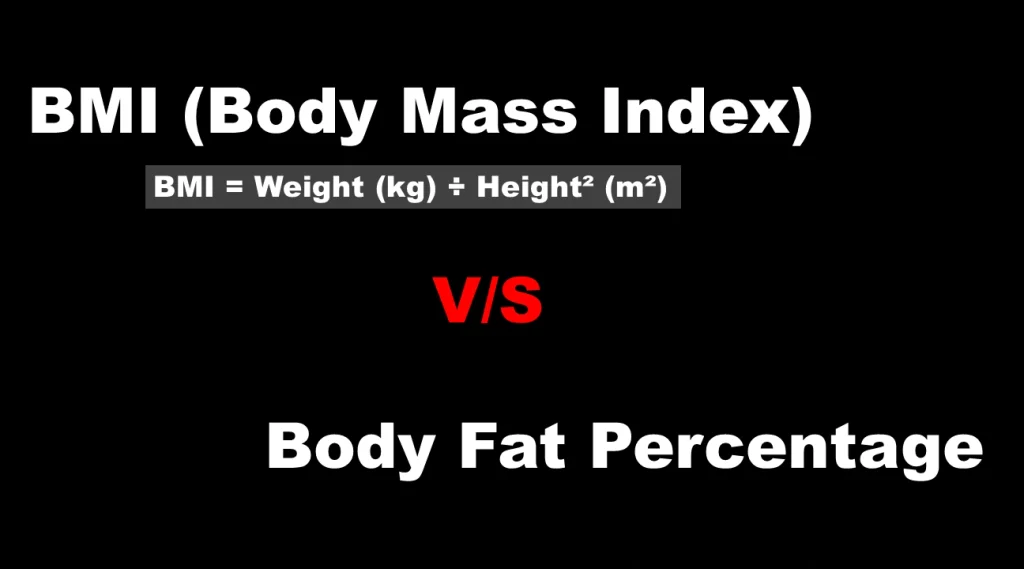
Understanding the difference between BMI and body fat percentage can help you interpret these measurements more accurately.
What Is BMI?
BMI stands for Body Mass Index. It is a calculation based on a person’s weight and height.
The standard BMI formula is:
BMI = Weight (kg) ÷ Height² (m²)
For example, if someone weighs 70 kg and is 1.75 meters tall:
BMI = 70 ÷ (1.75 × 1.75)
BMI ≈ 22.9
BMI is commonly used as a screening measurement to place adults into weight categories based on their BMI value.
You can quickly calculate it using the BMI Calculator on NexCalco.
What Does BMI Tell You?
BMI provides a simple relationship between height and weight.
For adults, commonly used BMI categories are:
| BMI | Category |
|---|---|
| Below 18.5 | Underweight |
| 18.5 to 24.9 | Healthy weight |
| 25.0 to 29.9 | Overweight |
| 30.0 or higher | Obesity |
These categories are general screening ranges for adults and should not be treated as a complete assessment of an individual’s health.
BMI does not directly measure body fat.
What Is Body Fat Percentage?
Body fat percentage is the percentage of your total body weight that comes from fat.
For example, if a person weighs 80 kg and has a body fat percentage of 20%, approximately 16 kg of their body weight is fat.
The calculation would be:
80 × 20% = 16 kg
The remaining body weight consists of lean tissues such as muscle, bone, organs, and body water.
Body fat percentage can therefore provide information about body composition that BMI cannot provide.
How Is Body Fat Percentage Calculated?
Unlike BMI, body fat percentage cannot be calculated accurately from height and weight alone.
There are several methods for estimating body fat, including:
- Skinfold measurements
- Bioelectrical impedance devices
- DEXA scans
- Air displacement methods
- Underwater weighing
- Circumference-based formulas
Different methods can produce different estimates, and some are more accurate than others.
A calculator may use information such as age, sex, height, weight, and body measurements to provide an estimate.
You can use the Body Fat Calculator on NexCalco to estimate body fat percentage.
BMI vs Body Fat Percentage
The main difference is what each measurement looks at.
| Feature | BMI | Body Fat Percentage |
|---|---|---|
| Main measurement | Weight relative to height | Estimated amount of body fat |
| Uses weight | Yes | Usually yes |
| Uses height | Yes | Often yes |
| Measures body fat directly | No | Estimates body fat |
| Accounts for muscle mass | No | More directly related to body composition |
| Calculation | Simple | Depends on the method |
| Main use | General screening | Body composition assessment |
BMI is easier to calculate, while body fat percentage can provide more information about the makeup of a person’s weight.
Why Can Two People Have the Same BMI but Different Body Fat?
This is one of the biggest differences between the two measurements.
Imagine two people who are both:
- 1.80 meters tall
- 80 kg in weight
Both would have approximately the same BMI:
80 ÷ (1.80 × 1.80) ≈ 24.7
However, their body compositions could be very different.
One person may have more muscle and less body fat, while the other may have less muscle and more body fat.
Because BMI only uses height and weight, it cannot distinguish between these differences.
BMI Does Not Measure Muscle Mass
Muscle is denser than fat.
This means someone with a relatively high amount of muscle can have a higher body weight without having a high amount of body fat.
For this reason, BMI can sometimes provide a less complete picture for people with substantial muscular development.
This does not mean BMI is useless. It simply means that BMI should be interpreted in context rather than viewed as a complete measurement of body composition.
Body Fat Percentage Provides More Information About Composition
Body fat percentage focuses specifically on the proportion of fat in the body.
This can be useful when someone wants to monitor changes in body composition over time.
For example, a person’s body weight might remain relatively stable while their body fat percentage changes because of changes in muscle and fat.
However, estimated body fat percentage is not perfectly accurate. The result can vary depending on the measurement method and the conditions under which the measurement is taken.
Example: Same Weight, Different Body Composition
Suppose two people each weigh 75 kg.
Person A has:
- 75 kg body weight
- 15% estimated body fat
Person B has:
- 75 kg body weight
- 25% estimated body fat
Their BMI would be identical if they were also the same height.
But their body composition would be different.
This example shows why weight and BMI alone cannot describe exactly how much of a person’s weight is fat.
BMI Is Easier to Calculate
One advantage of BMI is its simplicity.
You generally need only two measurements:
- Weight
- Height
The formula is straightforward, which makes BMI useful for large-scale screening and quick calculations.
For example:
Weight = 65 kg
Height = 1.65 m
BMI = 65 ÷ (1.65 × 1.65)
BMI ≈ 23.9
No specialized equipment is required.
Body Fat Percentage Can Be More Difficult to Measure
Body fat percentage requires an estimation method or specialized equipment.
For example, a body composition scale may use bioelectrical impedance to estimate body fat. A professional may use skinfold measurements or another technique.
Results can vary based on hydration, food intake, exercise, equipment, and measurement technique.
Therefore, it can be more useful to focus on trends over time rather than treating one body fat reading as an exact number.
Which Measurement Is More Useful?
There is no single measurement that gives a complete picture of health or body composition.
BMI can be useful for quickly understanding the relationship between height and weight.
Body fat percentage can provide additional information about the proportion of body weight that is fat.
The appropriate measurement depends on what you are trying to understand.
For general screening, BMI is convenient and widely used.
For body composition, body fat percentage can provide additional information.
Can BMI and Body Fat Percentage Be Used Together?
Yes. Looking at both measurements can provide more context than looking at either one alone.
For example, BMI can show where a person’s height-to-weight ratio falls within standard adult categories, while body fat percentage can provide an estimate of body composition.
However, neither measurement should be considered a complete health assessment.
Other factors can also matter, including:
- Waist circumference
- Physical activity
- Diet
- Blood pressure
- Blood glucose
- Cholesterol
- Age
- Medical history
- Overall fitness
BMI and Body Fat Percentage for Men and Women
Body composition naturally differs between men and women, including typical differences in body fat levels.
Body fat percentage estimates are therefore often interpreted using sex-specific reference ranges.
BMI categories for adults, on the other hand, generally use the same standard categories regardless of sex.
Age can also affect body composition, which is another reason body fat percentage should be interpreted in context.
BMI and Body Fat Percentage for Different Ages
BMI should not be interpreted in exactly the same way for everyone.
For adults, standard BMI categories are commonly used.
For children and teenagers, BMI is interpreted differently because body composition changes as they grow. BMI-for-age percentiles are generally used rather than simply applying adult BMI categories.
Body fat percentage also varies naturally with age.
If you are checking measurements for a child or teenager, use age-appropriate guidance rather than adult ranges.
Common Misunderstandings About BMI
A High BMI Does Not Automatically Mean High Body Fat
BMI does not separate muscle from fat. A higher BMI can therefore have different explanations.
A Normal BMI Does Not Guarantee Perfect Health
Being within a standard BMI range does not provide a complete picture of a person’s health.
BMI Is Not a Direct Body Fat Measurement
BMI is calculated from height and weight. It does not directly measure how much body fat someone has.
Common Misunderstandings About Body Fat Percentage
Body Fat Calculators Provide Estimates
A calculator generally provides an estimate rather than an exact laboratory measurement.
Different Methods Can Give Different Results
A body fat percentage from a home scale may not match a result from another measurement method.
One Measurement Does Not Tell the Whole Story
Body composition can change, and measurement conditions can affect the result. Tracking measurements consistently can make changes easier to interpret.
How to Use BMI and Body Fat Calculators
If you want a quick BMI estimate, start with your height and weight and use the BMI Calculator.
If you also want an estimate of body fat percentage, you can use the Body Fat Calculator.
Using both can help you understand two different aspects of your body measurements.
Example of Using Both Measurements
Suppose an adult weighs 80 kg and is 1.75 meters tall.
The BMI calculation is:
BMI = 80 ÷ (1.75 × 1.75)
BMI ≈ 26.1
This places the BMI in the standard adult overweight category.
Now suppose a body fat measurement estimates that the person has 20% body fat.
These two numbers tell us different things:
- BMI: Shows the relationship between weight and height.
- Body fat percentage: Estimates the proportion of body weight that is fat.
Looking at them together gives more information than simply looking at body weight.
What Should You Track Over Time?
If your goal is to monitor changes in body composition, consistency is important.
For example, if you regularly measure your weight, BMI, or body fat percentage, try to use similar conditions each time.
Keep track of:
- Date of measurement
- Body weight
- BMI
- Estimated body fat percentage
- Waist measurement, if relevant
A record can help you see whether measurements are changing over time instead of focusing on a single result.
Final Thoughts
BMI and body fat percentage are related to body size and composition, but they are not the same measurement.
BMI uses height and weight to estimate a person’s weight category, while body fat percentage estimates how much of the body is made up of fat.
BMI is quick and easy to calculate, but it does not distinguish between muscle and fat. Body fat percentage can provide more information about body composition, although the result depends on the method used to estimate it.
For a quick BMI calculation, you can use the BMI Calculator. To estimate body fat percentage, try the Body Fat Calculator on NexCalco.
These calculators are useful for general information and tracking, but they should not be treated as a diagnosis or a complete assessment of health.